
Last year, over 730,000 pets flew on Alaska Airlines alone. Most were small dogs that fit under airplane seats, but thousands were large dogs traveling in cargo holds. The experience wasn’t great for many of them.
Big dogs face serious restrictions when flying. Airlines generally won’t let dogs over 20 pounds in the cabin unless they’re service animals. That leaves Golden Retrievers, Labs, German Shepherds, and other popular breeds with one main option: cargo. Learning how to fly with a large dog means understanding this reality upfront.
Pet travel surveys show 40% of dog owners find flying with pets much harder than traveling alone. Weather delays, breed restrictions, and expensive fees all contribute to the frustration.
Airline Size Rules Are Pretty Strict
Airlines don’t mess around with size limits. American Airlines requires cabin pets to fit in carriers measuring 19″ x 13″ x 9″ maximum. Anything bigger goes to cargo – no exceptions.
Weight limits vary but usually cap around 100 pounds for the dog and carrier combined. Alaska Airlines bumps this to 150 pounds, giving owners of bigger dogs slightly more room to work with.
Dogs need enough space to stand up, turn around, and lie down without touching the crate walls or ceiling. This is required by federal animal welfare regulations. Nobody makes exceptions to these rules. Gate agents can’t override size requirements, even for well-behaved dogs or emergency situations.
Cargo Travel
When people research how to fly with a large dog, they usually discover cargo travel means dealing with extensive paperwork and regulations.
Health certificates top the requirement list. Veterinarians must examine the dog and sign off on health documents within 10 days of travel. Dogs need current rabies vaccines, and many destinations require additional shots or treatments.
The CDC changed import rules in August 2024. Dogs entering the US now must be at least 6 months old, have microchip identification, and come with completed CDC import forms. Processing these forms takes 24-48 hours minimum.
Crates need IATA approval, which sounds simple but gets complicated fast. Many pet stores sell “airline-approved” crates that don’t actually meet specific airline requirements. The crate needs proper ventilation, secure latches, and food/water dishes accessible from outside.
Weather restrictions shut down pet transport regularly. Most airlines won’t move pets when temperatures hit 85°F or drop below 45°F. Summer heat waves can ground pet travel for weeks.
Airlines also maintain long lists of banned breeds. American Airlines won’t transport Bulldogs, Pugs, Boston Terriers, Pit Bulls, or dozens of other breeds considered high-risk. Mixed breeds that look like banned types get refused too.
Costs Add Up Fast
Flying large dogs costs way more than most people expect. Cargo fees start around $200 domestically but often hit $500-600. International flights easily cost $800-1200 just for transport.
Health certificates run $75-150 for domestic travel, more for international destinations. Proper IATA crates cost $150-400, depending on dog size. Documentation and processing fees add another $50-100.
Total costs frequently exceed $1000 per trip. Connecting flights mean paying cargo fees for each segment, sometimes doubling the expense.
Airlines charge these fees regardless of flight delays, cancellations, or other problems. Pet fees are generally non-refundable, even when the airline causes issues.
Military families get some relief. American Airlines offers 50% discounts for active duty members with orders. Most pet owners pay full price though.
Safety Issues Are Legitimate Concerns
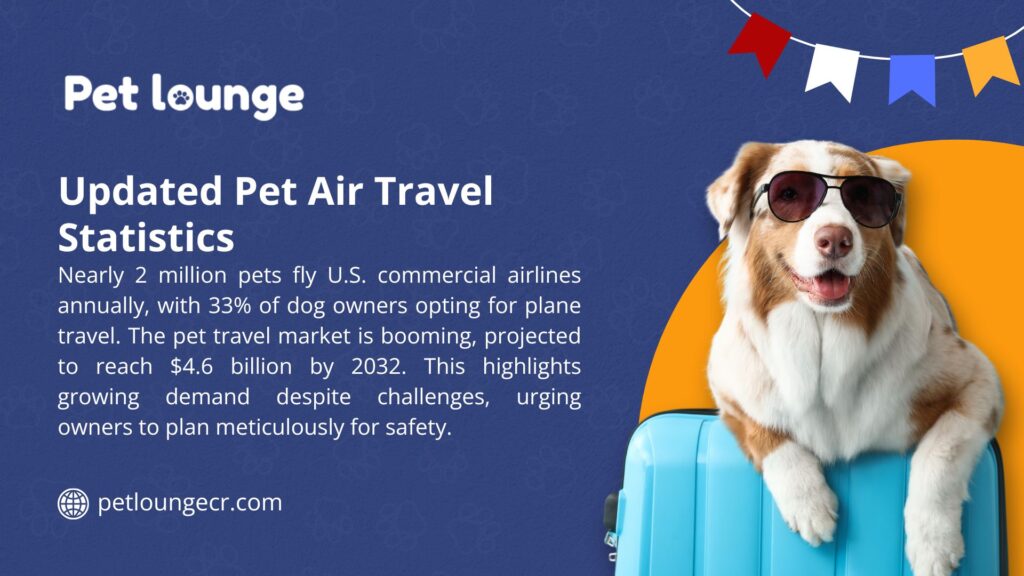
Cargo holds maintain cabin pressure and temperature control, but problems still happen. United Airlines reported 9 pet deaths in 2016 alone, with causes ranging from heart failure to breathing difficulties.
Flat-faced breeds face particular dangers. Bulldogs, Pugs, and similar dogs struggle with breathing under stress, especially at altitude. Most airlines now refuse these breeds entirely for cargo transport.
The American Veterinary Medical Association advises against sedating pets for flights. Tranquilizers interfere with temperature regulation and breathing, potentially making problems worse instead of better.
Ground delays create additional risks. Dogs can sit in cargo holds on hot tarmacs for hours during flight delays. While holds have climate control, loading and unloading expose pets to extreme temperatures.
Handling mistakes happen too. Crates get dropped, latches break, and occasionally dogs escape on airport tarmacs. Airlines train ground crews, but turnover is high and experience levels vary significantly.
Breed Restrictions Catch Many Owners Off Guard
Airlines ban more breeds than most people realize. American Airlines prohibits all Bulldog varieties, most Mastiff types, Pugs, Boston Terriers, Chow Chows, and Pit Bull breeds, among others.
The restriction list includes mixed breeds too. If a dog appears to be a predominantly banned breed, most airlines refuse transport. This surprises owners who never considered their mixed breed problematic.
Different airlines have different lists. United accepts some brachycephalic breeds that American refuses, though with additional requirements and liability waivers.
These restrictions exist for insurance and safety reasons. Airlines deal with liability concerns and regulatory oversight that limit their flexibility. Individual employees rarely have the authority to make exceptions.
Preparing Dogs for Flight Stress
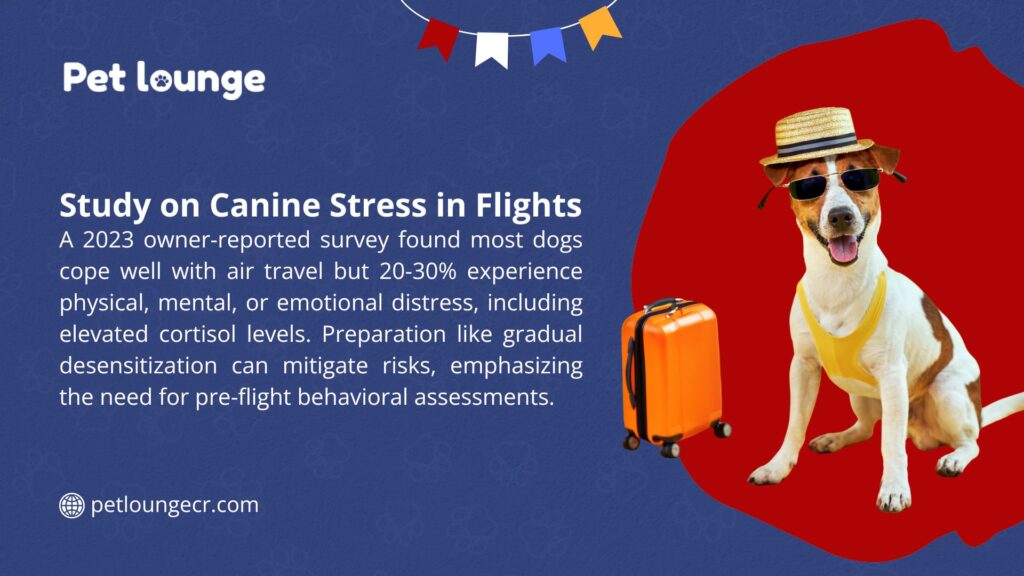
Dogs unfamiliar with crate confinement often struggle during air travel. Starting crate training 4-6 weeks before departure helps significantly. The crate should become a comfortable space, not a punishment.
Veterinary appointments need scheduling well ahead of travel dates. Health certificates expire quickly, and getting appointments during busy seasons can be difficult. Some vets specialize in travel documentation and streamline the process.
Dogs shouldn’t eat within 4 hours of departure to minimize motion sickness. They should have water access until check-in, though. Many experienced travelers freeze water in crate dishes so it melts gradually during flights.
Early airport arrival is required for pet check-in, sometimes 2+ hours before departure. This allows time for paperwork verification and crate inspection. Problems discovered at check-in can derail entire travel plans.
Better Alternatives Exist
Many dog owners who initially planned to fly end up choosing ground transport after researching airline requirements and restrictions.
Professional pet transport companies have grown significantly in response to airline limitations. These services use climate-controlled vehicles with trained animal handlers for door-to-door transport.
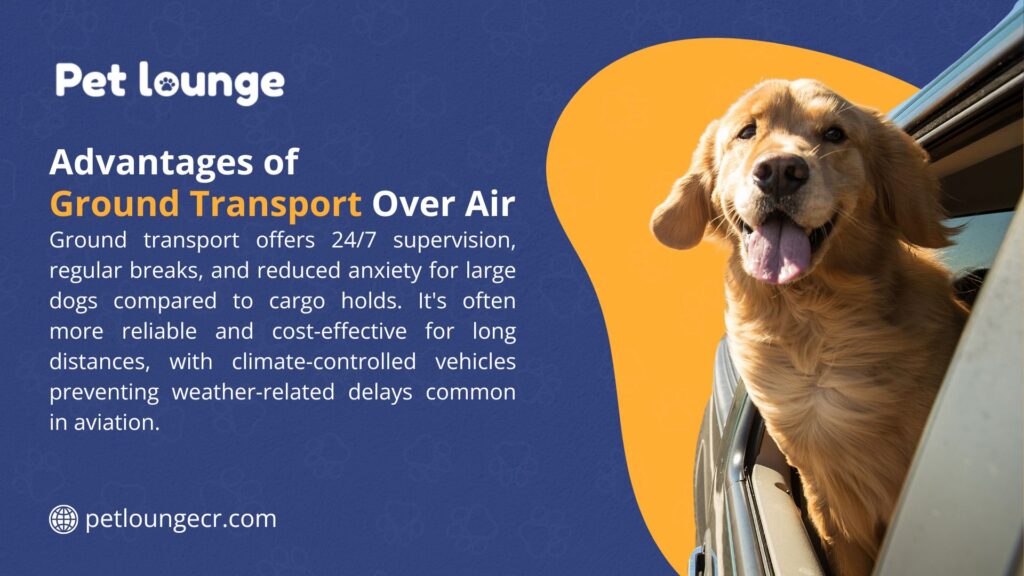
Ground transport typically costs more than airline cargo but eliminates many stress factors. Dogs get regular exercise stops, personal attention, and don’t deal with altitude or airport chaos.
Cross-country ground transport usually takes 3-5 days, depending on the route and number of stops. Some owners prefer this pace over the stress of same-day air travel.
Driving personally works for shorter distances. Road trips allow complete control over timing, stops, and the dog’s environment. Many owners find this less stressful than dealing with airline bureaucracy.
Private aviation accommodates larger dogs in the cabin, but costs typically exceed $10,000 for cross-country flights. Some boutique airlines like JSX allow dogs up to 79 pounds to purchase adjacent seats, though availability is extremely limited.
Professional Transport Services Fill the Gap
The pet transport industry has evolved specifically to address airline cargo concerns. Professional services employ trained handlers and use vehicles designed for animal comfort and safety.
These companies handle all documentation requirements, understand interstate health regulations, and maintain veterinary contacts along transport routes. Real-time tracking and regular updates provide communication that airline cargo systems typically don’t offer.
Cost differences between airline cargo and professional ground transport have narrowed as airline fees increase and service quality concerns grow. For many pets, especially those with anxiety or health issues, professional transport provides better outcomes.
Transport services accommodate special needs that airlines cannot. Dogs requiring medication schedules, special diets, or extra attention get personalized care, which is impossible in airline cargo systems.
Comparing costs across different transport methods helps inform decisions. Resources covering how much do pet transport services cost provide detailed breakdowns for various service levels and distances.
Need reliable transport for a large dog?
Pet Lounge specializes in professional ground transport that eliminates airline cargo hassles. Experienced handlers, proper equipment, and personalized care make relocation stress-free for large dogs.
Learn more about professional pet transport and discover why ground transport often works better than airline cargo for large dogs.


